
Virtual reality (VR) is an immersive medium that represents a particularly powerful form of geographical visualization due to the physical and emotional involvement of users. Against the backdrop of previous research on VR in geography teaching, this study examines the extent to which geography teachers’ beliefs of space change when they engage with virtual reality learning environments in the context of teacher training. The starting point is the assumption that understandings of space are individually distinct and organized in belief systems.
The framework for the qualitative study is a four-part training series with 13 geography teachers from Berlin and Brandenburg. Guided individual interviews were conducted before and after the training, and group discussions were held during the training events. The evaluation was carried out using content-structuring content analysis.
The results show that teachers’ understandings of space can largely be classified according to Wardenga’s four concepts of space. The understanding of space as a container and as a construct are centrally anchored in the belief system and largely stable. In addition, an alternative understanding of space becomes apparent, which focuses on the emotional, affective, physical, and bodily dimensions of space and is theoretically linked to emotional and non-representational geographies.
Changes in the course of the training are particularly evident in this alternative understanding of space, which has become more central and differentiated through the use of VR and remains significant in the understanding of space. At the same time, it becomes clear that power structures and socialization processes that shape the physical-affective experience of space are insufficiently reflected. For geography teaching, this implies that emotional and physical perceptions of space must be systematically incorporated and critically reflected upon.
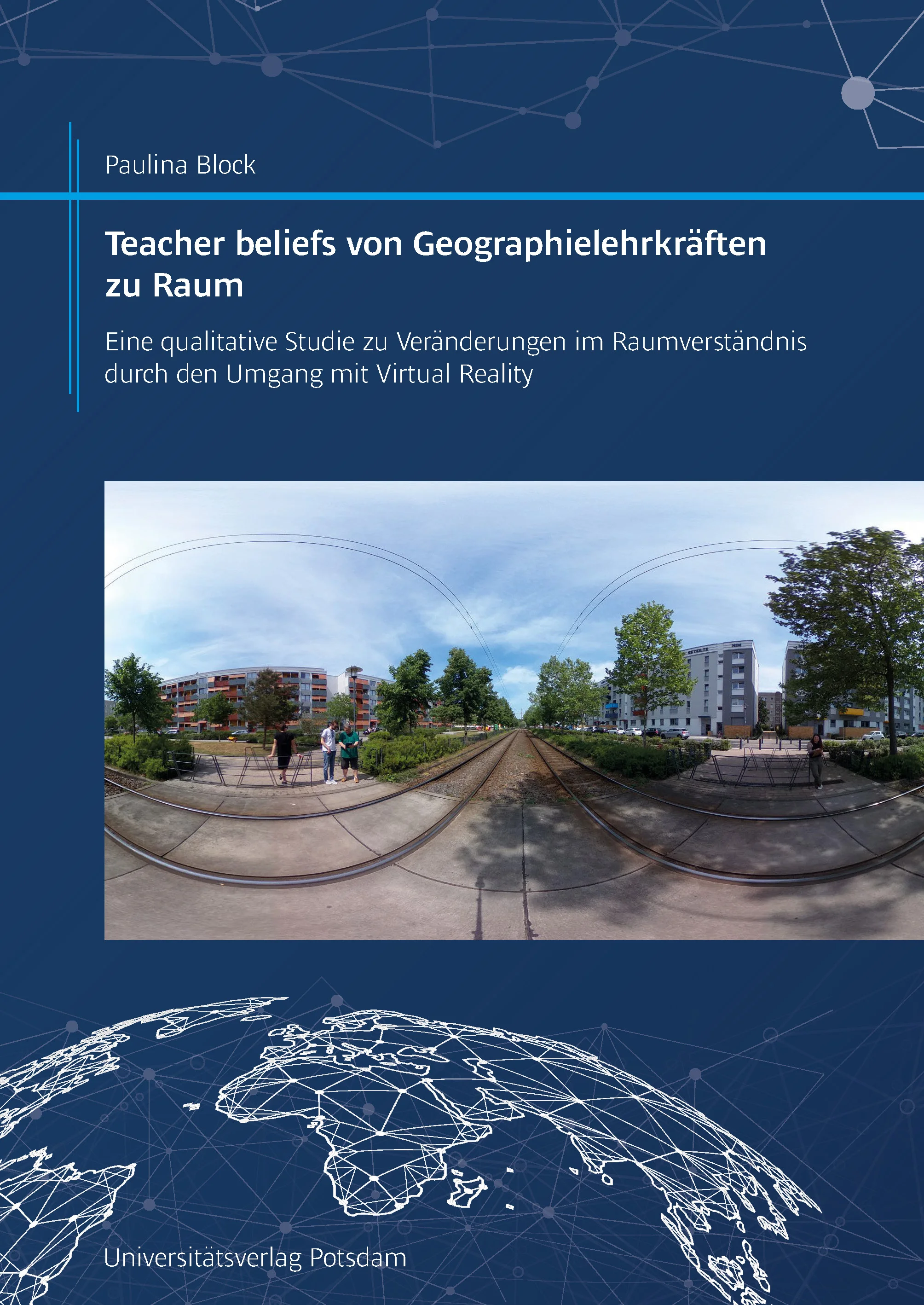

Teacher beliefs von Geographielehrkräften zu Raum
Eine qualitative Studie zu Veränderungen im Raumverständnis durch den Umgang mit Virtual Reality
ISBN: 978-3-86956-615-3
283 pages, Paperback
Release year 2026
Series: Potsdamer Geographische Praxis , 23
License: Creative-Commons-Lizenz CC BY 4.0
Note for individual customers from other EU countries: Due to shipping restrictions under the EU Packaging Regulation (PPWR), direct delivery of printed copies is currently not possible. Please contact a bookstore in your home country.
Non-taxable transaction according to § 1 (1) UStG/VAT Act in combination with § 2 (3) UStG/VAT Act a. F. Providing this service, the University of Potsdam does not constitute a Betrieb gewerblicher Art/Commercial Institution according to § 1 (1) No. 6 or § 4 KStG/Corporate Tax Act. If the legal characterization of our business is changed to a commercial institution subsequently, we reserve the right to invoice VAT additionally.
Virtual reality (VR) is an immersive medium that represents a particularly powerful form of geographical visualization due to the physical and emotional involvement of users. Against the backdrop of previous research on VR in geography teaching, this study examines the extent to which geography teachers’ beliefs of space change when they engage with virtual reality learning environments in the context of teacher training. The starting point is the assumption that understandings of space are individually distinct and organized in belief systems.
The framework for the qualitative study is a four-part training series with 13 geography teachers from Berlin and Brandenburg. Guided individual interviews were conducted before and after the training, and group discussions were held during the training events. The evaluation was carried out using content-structuring content analysis.
The results show that teachers’ understandings of space can largely be classified according to Wardenga’s four concepts of space. The understanding of space as a container and as a construct are centrally anchored in the belief system and largely stable. In addition, an alternative understanding of space becomes apparent, which focuses on the emotional, affective, physical, and bodily dimensions of space and is theoretically linked to emotional and non-representational geographies.
Changes in the course of the training are particularly evident in this alternative understanding of space, which has become more central and differentiated through the use of VR and remains significant in the understanding of space. At the same time, it becomes clear that power structures and socialization processes that shape the physical-affective experience of space are insufficiently reflected. For geography teaching, this implies that emotional and physical perceptions of space must be systematically incorporated and critically reflected upon.
-
 2022
2022Gefährdungsbeurteilung und Erste Hilfe
13,50 €Note for individual customers from other EU countries: Due to shipping restrictions under the EU Packaging Regulation (PPWR), direct delivery of printed copies is currently not possible. Please contact a bookstore in your home country.
Non-taxable transaction according to § 1 (1) UStG/VAT Act in combination with § 2 (3) UStG/VAT Act a. F. Providing this service, the University of Potsdam does not constitute a Betrieb gewerblicher Art/Commercial Institution according to § 1 (1) No. 6 or § 4 KStG/Corporate Tax Act. If the legal characterization of our business is changed to a commercial institution subsequently, we reserve the right to invoice VAT additionally.zzgl. Versandkosten
-
 2000
2000Paideia und bildende Kunst bei Plato
6,00 €Note for individual customers from other EU countries: Due to shipping restrictions under the EU Packaging Regulation (PPWR), direct delivery of printed copies is currently not possible. Please contact a bookstore in your home country.
Non-taxable transaction according to § 1 (1) UStG/VAT Act in combination with § 2 (3) UStG/VAT Act a. F. Providing this service, the University of Potsdam does not constitute a Betrieb gewerblicher Art/Commercial Institution according to § 1 (1) No. 6 or § 4 KStG/Corporate Tax Act. If the legal characterization of our business is changed to a commercial institution subsequently, we reserve the right to invoice VAT additionally.zzgl. Versandkosten
-
 2025
2025„Ein Lerngerüst bauen“ – das Schreiben dialektischer Erörterungen durch den SRSD-Ansatz vermitteln
Note for individual customers from other EU countries: Due to shipping restrictions under the EU Packaging Regulation (PPWR), direct delivery of printed copies is currently not possible. Please contact a bookstore in your home country.
Non-taxable transaction according to § 1 (1) UStG/VAT Act in combination with § 2 (3) UStG/VAT Act a. F. Providing this service, the University of Potsdam does not constitute a Betrieb gewerblicher Art/Commercial Institution according to § 1 (1) No. 6 or § 4 KStG/Corporate Tax Act. If the legal characterization of our business is changed to a commercial institution subsequently, we reserve the right to invoice VAT additionally. -
 2000
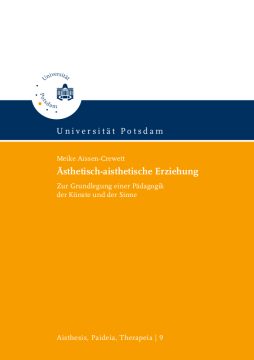
2000Ästhetisch-aisthetische Erziehung
14,50 €Note for individual customers from other EU countries: Due to shipping restrictions under the EU Packaging Regulation (PPWR), direct delivery of printed copies is currently not possible. Please contact a bookstore in your home country.
Non-taxable transaction according to § 1 (1) UStG/VAT Act in combination with § 2 (3) UStG/VAT Act a. F. Providing this service, the University of Potsdam does not constitute a Betrieb gewerblicher Art/Commercial Institution according to § 1 (1) No. 6 or § 4 KStG/Corporate Tax Act. If the legal characterization of our business is changed to a commercial institution subsequently, we reserve the right to invoice VAT additionally.zzgl. Versandkosten