
Today’s society is confronted with a variety of uncertainties, including economic crises such as inflation, war in Europe, and increasingly limited housing space. Another key problem is the ongoing climate change. As the generation that will have to deal with its long-term consequences and is directly affected by it, children and young people are considered as particularly vulnerable groups. One possible emotional reaction in the context of climate change is what is known as eco-anxiety, which encompasses both fear of climate change itself and its far-reaching consequences. In the context of education for sustainable development (ESD), addressing climate change in school lessons is therefore particularly important.
Since education for sustainable development addresses not only cognitive but also emotional learning processes, the question arises as to how climate change-related emotions are perceived and dealt with in the educational context. Despite increasing scientific debate on climate anxiety among young people, there is still a lack of studies on how geography teachers perceive this anxiety. This is where the present study comes in. Using guided, problem-centered interviews with five teachers from Brandenburg, it has been examined how they perceive their students’ attitudes toward climate change and how they deal with possible fears. The interviews were then evaluated using structured qualitative content analysis. The ultimate goal of the study was to derive recommendations for action on how to deal with climate anxiety.
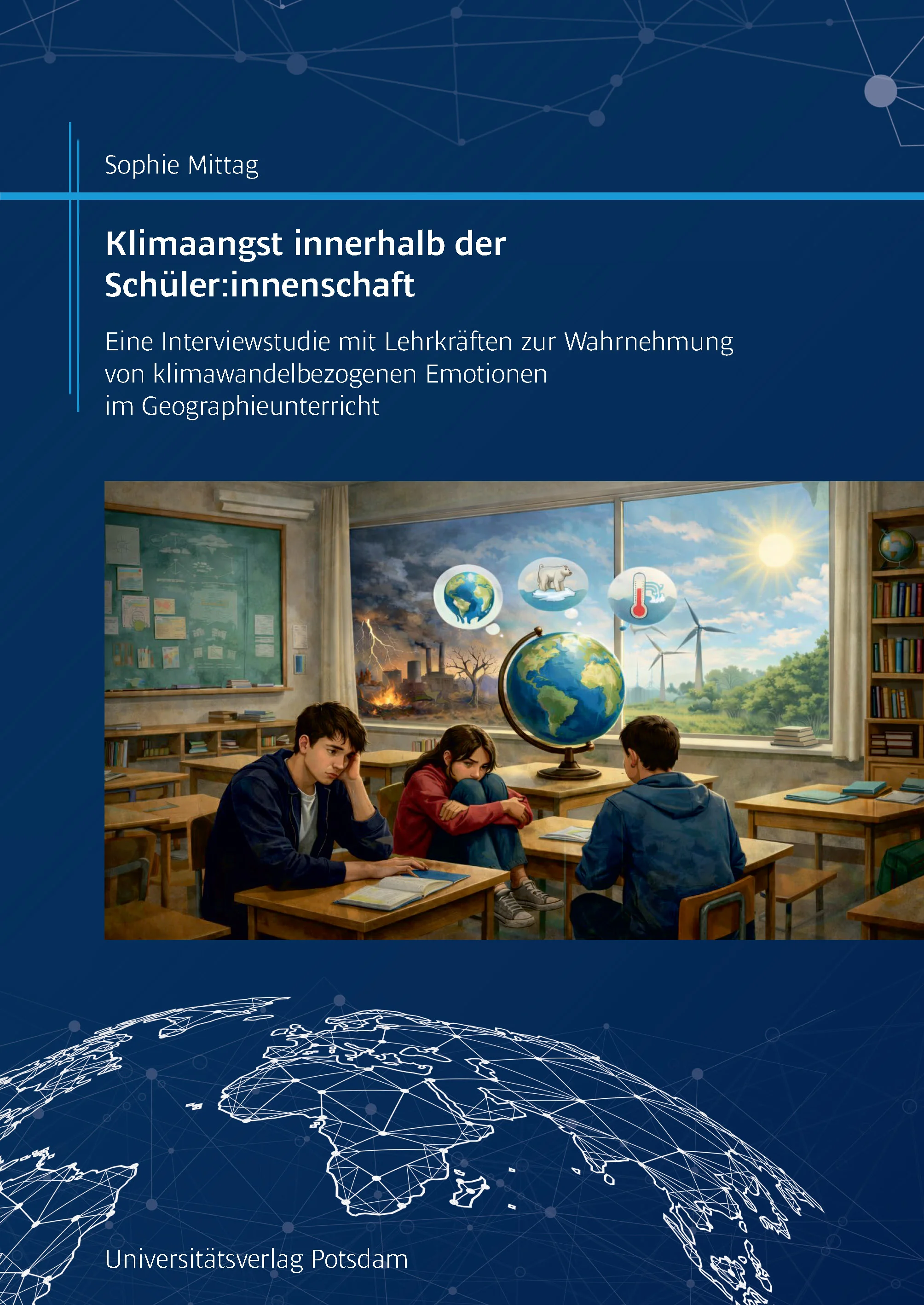

Klimaangst innerhalb der Schüler:innenschaft
Eine Interviewstudie mit Lehrkräften zur Wahrnehmung von klimawandelbezogenen Emotionen im Geographieunterricht
ISBN: 978-3-86956-613-9
103 pages
Release year 2026
Series: Potsdamer Geographische Praxis , 22
License: Creative-Commons-Lizenz CC BY 4.0
Note for individual customers from other EU countries: Due to shipping restrictions under the EU Packaging Regulation (PPWR), direct delivery of printed copies is currently not possible. Please contact a bookstore in your home country.
Non-taxable transaction according to § 1 (1) UStG/VAT Act in combination with § 2 (3) UStG/VAT Act a. F. Providing this service, the University of Potsdam does not constitute a Betrieb gewerblicher Art/Commercial Institution according to § 1 (1) No. 6 or § 4 KStG/Corporate Tax Act. If the legal characterization of our business is changed to a commercial institution subsequently, we reserve the right to invoice VAT additionally.
Today’s society is confronted with a variety of uncertainties, including economic crises such as inflation, war in Europe, and increasingly limited housing space. Another key problem is the ongoing climate change. As the generation that will have to deal with its long-term consequences and is directly affected by it, children and young people are considered as particularly vulnerable groups. One possible emotional reaction in the context of climate change is what is known as eco-anxiety, which encompasses both fear of climate change itself and its far-reaching consequences. In the context of education for sustainable development (ESD), addressing climate change in school lessons is therefore particularly important.
Since education for sustainable development addresses not only cognitive but also emotional learning processes, the question arises as to how climate change-related emotions are perceived and dealt with in the educational context. Despite increasing scientific debate on climate anxiety among young people, there is still a lack of studies on how geography teachers perceive this anxiety. This is where the present study comes in. Using guided, problem-centered interviews with five teachers from Brandenburg, it has been examined how they perceive their students’ attitudes toward climate change and how they deal with possible fears. The interviews were then evaluated using structured qualitative content analysis. The ultimate goal of the study was to derive recommendations for action on how to deal with climate anxiety.
-
 2026
Teacher beliefs von Geographielehrkräften zu Raum
33,00 €Note for individual customers from other EU countries: Due to shipping restrictions under the EU Packaging Regulation (PPWR), direct delivery of printed copies is currently not possible. Please contact a bookstore in your home country.
Non-taxable transaction according to § 1 (1) UStG/VAT Act in combination with § 2 (3) UStG/VAT Act a. F. Providing this service, the University of Potsdam does not constitute a Betrieb gewerblicher Art/Commercial Institution according to § 1 (1) No. 6 or § 4 KStG/Corporate Tax Act. If the legal characterization of our business is changed to a commercial institution subsequently, we reserve the right to invoice VAT additionally.zzgl. Versandkosten
-
 2013
Dharavi – ein Ort der Armut?
10,00 €Note for individual customers from other EU countries: Due to shipping restrictions under the EU Packaging Regulation (PPWR), direct delivery of printed copies is currently not possible. Please contact a bookstore in your home country.
Non-taxable transaction according to § 1 (1) UStG/VAT Act in combination with § 2 (3) UStG/VAT Act a. F. Providing this service, the University of Potsdam does not constitute a Betrieb gewerblicher Art/Commercial Institution according to § 1 (1) No. 6 or § 4 KStG/Corporate Tax Act. If the legal characterization of our business is changed to a commercial institution subsequently, we reserve the right to invoice VAT additionally.zzgl. Versandkosten
-
 2023
Grenzüberschreitende Daseinsvorsorge im deutsch-polnischen Grenzraum
Note for individual customers from other EU countries: Due to shipping restrictions under the EU Packaging Regulation (PPWR), direct delivery of printed copies is currently not possible. Please contact a bookstore in your home country.
Non-taxable transaction according to § 1 (1) UStG/VAT Act in combination with § 2 (3) UStG/VAT Act a. F. Providing this service, the University of Potsdam does not constitute a Betrieb gewerblicher Art/Commercial Institution according to § 1 (1) No. 6 or § 4 KStG/Corporate Tax Act. If the legal characterization of our business is changed to a commercial institution subsequently, we reserve the right to invoice VAT additionally. -
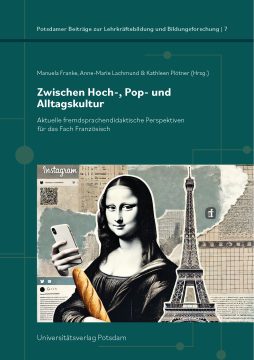
 2025
Zwischen Hoch-, Pop- und Alltagskultur
17,50 €Note for individual customers from other EU countries: Due to shipping restrictions under the EU Packaging Regulation (PPWR), direct delivery of printed copies is currently not possible. Please contact a bookstore in your home country.
Non-taxable transaction according to § 1 (1) UStG/VAT Act in combination with § 2 (3) UStG/VAT Act a. F. Providing this service, the University of Potsdam does not constitute a Betrieb gewerblicher Art/Commercial Institution according to § 1 (1) No. 6 or § 4 KStG/Corporate Tax Act. If the legal characterization of our business is changed to a commercial institution subsequently, we reserve the right to invoice VAT additionally.zzgl. Versandkosten